Showing posts with label Math. Show all posts

Thursday, August 22, 2013

Geometry Notebook connect the lines and angles for learning fun

If you have been following our homeschool journey you know In the Hands of a Child is one of my favorite companies, so when they came up as a vendor with the Schoolhouse review crew I was happy to work with them to review a project pack.  It was actually a bit of a challenge to select a project to review that I didn't already own (I'm a little addicted). I decided to go with the Geometry Notepack (I already have the Lapbook project as well as the coordinating younger student lapbook so it made sense).

This was not our first In the Hands of a Child, if fact since we began homeschooling 5 years ago, the boys have completed more than 20 units. This time we used the laptop to read the research guide from (usually I either print it out or load it to my Nook). I also printed 2 copies of the notebook pages as Cameron's friend who is one summer break was spending a lot of time around the house and when asked to participate in school he was willing and eager.
We actually did the project in 5 sittings as I printed a couple days combined.  I love the lesson plan guide in the front of the pdf file, it makes it so easy for me to plan our sessions and gives the kids something to check off as we complete the activities.
This unit is geared to grades 4-8 (Cameron is going into 5th grade , and his friend is also a 5th grader so it was a perfect match)  While the older boys worked on the Intro to Geometry unit, Nathan also worked on the coordinator K-3rd grade unit Shapes: Simple and Solid and had fun adding his own style to the lapbook project.
The Intro to Geometry notepack retails for $12.00 is has everything you will need to read and complete the notebook as well as a reading list of books you can add to the unit.  During August and the Back to School sale this unit is on sale for only $5.00 (the sale ends August 20, 2013)
I love that I was able to teach Cameron and his buddy more than the basic geometry terms and shapes, we also talked about occupations that use geometry and even got hands of with teaching and understanding the Pythagorean theorem (I didn't understand it myself until my freshman year of high school). Making the learning fun and hands on and having a finished notebook made the whole project that much more fun for both boys. We even talked about angles and such incorporating the concepts into their bike jump building. Keeping 2 10 and 11 year old boys engaged can be a challenge but thanks to In the Hands of a Child we not only kept them engaged but also taught them something that they will use again before their school careers are over.
 In the Hands of a Child was founded in 2002 by 2 homeschool Moms, (Niki and Kim) in 2005 they brought Katie on board and since the first pack , Plants was published have published over 450 units in a variety of topics and a wide range of grade levels.  What makes  In the Hands of a Child  different is the research guides written for each unit. Everything you need to complete the unit is included, from lesson plan ideas to answer keys, from research guides to graphics (notebook pages or mini books for lapbooks). Many of the units come in a variety of types from basic lapbooks to lapboos with a type it in feature to Notebook packs all as pdf files and even printed materials; some of the units even have full kits where everything is printed and ready to put together.
The Schoolhouse Review Crew reviewed a variety of the  In the Hands of a Child  and share their thoughts on each product, check them out by clicking on the button below.

Photobucket


Thursday, June 6, 2013

Math Mammoth Green Series: Supplement and Review for multigrades

I love when I find a helpful program that is versitile enough to cover a variety of areas of math. Thankfully we were asked to review one such program. Math Mammoth by Maria Miller, green series is one such program.


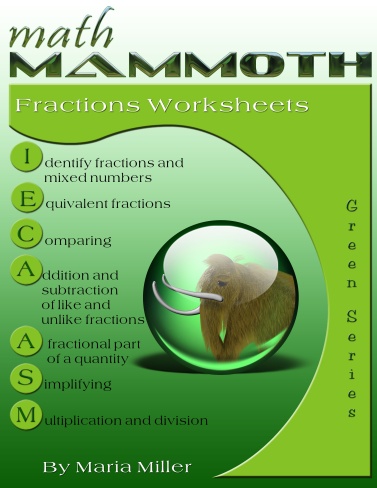
We received 3 workbooks for Cameron to work on : Fractions, Geometry, and Statistics. All 3 had elements that we could use as they are graded for 3rd-7th for the most part. We were able to add a worksheet from each book to the mix of math each week.
The fractions worksheets inspired both boys actually to find fraction activities outside of worksheets and improved their understanding of fractions. We worked through 5 fraction worksheets before we got to a point that is was more than Cameron could handle. We will be returning to fractions through the summer and into next school year.
With sections on equivalent fractions, comparing , adding and subtracting like, simplifying , multiplying and dividing fractions and more it covers everything a student will need to understand about fractions over their school career and beyond.
The file includes 61 worksheets for $6.95 as a pdf download. I will be using the same worksheets with Nathan next year to firm up fractions on paper for him as well as continuing with Cameron.


Math Mammoth Geometry Worksheet Collection book coverThe Geometry section introduced several new concepts to Cameron and reminding me of my freshman year of high school Geometry class. We worked on angles, triangles and other polygons before he got overwhelmed (I think we all get a bit overwhelmed with geometry). These worksheets gave us an opportunity to use some new tools including the protractor We will be revisiting this one more over the summer with area and volume and pythagorean theorem coordinating some hands on activities to firm up the concepts as needed. This workbook is 91 pages with 83 worksheets and sells for $9.00 as a pdf download.  The Geometry set did a really good job breaking down the various  aspects of geometry in a way that we could work through. As we move into area and volume we will spend more time with these sheets to fully grasp each concept and the tools it teaches.


Math Mammoth Statistics Worksheets Collection book cover

Finally Statistics , while this is a concept you wouldn't normally expect to teach a 3rd or 4th grader I felt he could really gain a solid foundation. this set is really focused the majority for 5th-7th but we did get a strong start on graphs and data analysis. We will save the rest of the information on Mean, Median, and Mode along with Variation and Projects for next year. As a blogger understanding graphs and data is valuable.  This worksheet set includes 47 worksheets and retails for $5.25. I think I hoped he would understand more of the information, but I know we will be able to come back to it later on and include it in our math journals.

Overall these worksheets have added focused practice that Cameron needed in areas of math that were not as strong in our curriculum already.  I am very grateful for the bite size approach offered in Worksheets by Topic. Each of the topics has samples available on the various pages if you are interested in a particular subject.
 The Math Mammoth program offers full curriculum as well. We reviewed the light blue series previously  and will be bringing that one out for Nathan in the fall.

I really like the programs variety and flexibility, I can print what I need when I need it and if we need to work on a concept again , I can reprint that section.

Math Mammoth covers a variety of topics in the Green Series as well as grades in  the Gold Series .

There  is something for everyone with Math Mammoth.
The Crew reviewed some of the variety available and share their thoughts.

Photobucket

 photo DisclaimerGraphic1_zpsf612f371.gif

Monday, April 29, 2013

Lunch time fractions


Hands on fractions during lunch time, means fun school. 

Back in November I picked up a set of fraction tiles from Learning Resources at our local Goodwill.  I love the bright colors and the plastic tray to hold everything. I think I paid something around $1.99 for the set (it is missing 1 1/10th tile but has the cardboard pieces as well so it works) The set new retails for $11.99 on their website, and honestly that is still a pretty reasonable price for everything you get. 
I decided to introduce the fraction tiles using a Montessori lesson. We laid the tiles out in rows totally 1 in like colors and I introduced the numbers to him.  Thankfully he already understood some of the concept of fractions from all the time he spends in the shop working with Daddy.
Next we focused on things that equal 1/2. We took combinations of tiles to equal 1/2 and checked with the 1/2 tile to be sure they matched. He also figured out that 1/5 tiles can't be matched up with 1/2 tiles.
 Finally,  we played with mixing up the tiles in rows totalling 1. That part was tricky, but since we had all the tiles ready, I knew he would come up with a combination to use all the tiles and fill the tray. 


Something so simple, but yet we covered a lot of ground in our 20 minute session of lunchtime math. Tomorrow we will work on writing fractions and drawing fractions. I have a set of fraction circles that are magnetic , maybe later in the week we can look at circles as well. 

Tuesday, April 23, 2013

Math Rider, learning quests equals math practice


  photo mathriderlogo_zps7d664106.jpg
 We were happy to see Math Rider join the Schoolhouse Review Crew as a vendor again. Cameron actually asked me to apply to review the program as he remembered the program from the previous review we did.
While I was surprised at his eagerness, I welcome any excitement when it comes to learning basic skills. So I watched for the product link to arrive and immediately set up the boys' computer with Math Rider
The last time we reviewed the program, the boys were struggling with some focus issues and were too easily distracted by the quests. We also were a little behind in our math skills so they were easily frustrated. Now that we have been working on basic.
 photo mathrider-product-box-v5-200x209_zpsf141caec.jpg
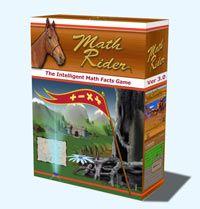
So What is Math Rider? Math Rider is a combination computer game and math mastery practice activity that include all 4 basic math operations (addition, subtraction, multiplication, and division)
Will my computer run Math Rider? Math Rider run on Adobe AIR run-time on both Windows and Mac systems., but I recommend checking the system requirements
How much does the program cost? Retail price is $47.00 and includes software updates for life.

Since the recommend age range is 6-12 years old I set both boys up with their own usernames  We found that for Nathan he could only do about half of a set of questions in each of the quests and worked better in practice mode rather than quest mode.

 Cameron actually did pretty well in quest mode, although he got frustrated with the quests since he didn't get 100% mastery and had to repeat a couple of the quests. I'm still torn on the whole expectation of 100% mastery , as a mom of two boys who struggle remembering some of the facts I set my mastery expectation at about 90% with 95% really being the higher goal.
The boys would play a minimum of 10 minutes to 20 minutes three times a week as either a math activity or a computer game. We played it at varying times the time we played.  The boys could earn extra computer play time by completing extra Math Rider time.

We will continue to use the program as a supplemental activity that the boys can use to work on their math fact mastery and typing skills. I know that typing skills isn't something that you would think of when thinking about a math game, but watching the boys play the game I am seeing their 10 key typing skills improve and that just adds extra benefits to the program. 

The program's price is a value especially considering the flexibility for larger families. You can have up to 8 players on a single use license and since the recommended age range covers grade 2-6 this product covers a large enough range to offset the initial $47. 
99 other crewmates also reviewed this program and you can read their thoughts by clicking the button below.

Photobucket 


Monday, March 11, 2013

1,2,3 Touch Math a hands on approach to 2nd grade math

We have been using a variety of hands on math products looking for a good fit for our 2nd grader. Currently we are using Touch Math's  2nd grade program.

2nd photo 2nd_zps507a9062.jpg


With a variety of grade levels (preK- upper Elementary) Touch Math's Homeschool program is a comprehesive hands on program.
So far in about 4 1/2 weeks we have covered 2 1/2 modules with in the first Unit.
Since it didn't line up exactly with our usual Math program , we found some things to be easy and some of the "new" concepts to be just challenging enough for Nathan. Our plan is to continue on and finish Unit A and assess where we are and how we are all feeling about the program. Nathan wants to jump ahead to Unit D to work with Time, Money, and Measurements and I will probably let him to keep him engaged, if we continue with the program after than we can go back and do Unit B and C to finish off the year.
The recommendation for time on the subject is 2.5 times your child's age. Nathan is 7 so we are spending between 15 and 20 minutes on Math 3-4 days a week. That gives us enough time to go over a module and do 1-2 pages thoroughly.  We have been using the program as is with only slight adjustments to the order in which we touch the numbers, especially 7 and 9, we found the order in which the touches where counted to be more frustrating than it was worth for Nathan. We adjusted the location of the single and double touches to match up with the way we write the numbers to keep consistency across the curriculum.
We  have been using the Flip Cards with each of the modules as a review, although Nathan isn't a big fan of flash card style learning when working on math facts, he would much rather me just ask him the facts. We even started having him orally recite the fact family; for example I give him the fact: 7+6=?, he says 13 and then says 6-7=13 13-7=6, 13-6=7 which is encouraging him to remember the fact families and making the connection between addition and subtraction facts.
The flip cards we received with the program match up to various units within the 2nd grade program. There are 3 sets of cards per unit so I was trying to figure out how to store 12 sets of flash cards so there could be used but still kept nice in their boxes (wishful thinking I know),
I finally found a basket to store the flip cards in so there are easy to get at. All 12 sets fit in the basket and as we open a new set I can rotate them around so the ones we are using can be found on top. I think I will tape up the boxes a bit to make them a little sturdier. For now though, this basket will fit on our Montessori shelf and be easy to get to.   The boys are working on some game style activities using the cards, as we come up with successful ones I will post some to share.
The other manipulatives we received we have been using some of the time, the number cards have been a fun colorful way to build larger numbers and work on place values without the normal color clues the boys are use to having.  We have also been using the form numbers as reminders for how to write the numbers. For now, since these manipulatives are used more for fun , we are storing them in the box they came in and keeping them available for the boys to use for creative learning activities.


If you are interesting in trying this out, you can download samples of the Touch Math program under each grade. The units can be purchased individually for $59.95 as a download (pdf including the teachers guide with the worksheets, or you can purchase all 4 units and save for $199.95.  Honestly I don't know if my budget would allow me to purchase this for just 1 child. We have enjoyed working with the program, and have seen positives in the way the program is helping Nathan. It has been a blessing to receive the program for reviewing. If price were not a factor I would highly recommend the download units. The various manipulatives are not required to use the program but do ad fun elements.
You can also read more about the program from other members of the Schoolhouse crew


Photobucket

 photo Disclaimer2_zpsff718028.gif
Be on the look out for more reviews from Unionvale Homeschool and the Schoolhouse Review Crew, there are some more fun ones coming up.
Enhanced by Zemanta

Thursday, March 7, 2013

Lone Star Learning = Hands on Learning with Picture Cards

Target Vocabulary PicturesSometimes teaching new concepts in Math can be a challenge. We try and use manipulatives or life examples whenever we can, so I was happy to find a simple card set that would help give us visual examples that would be easy to understand.  Lone Star Learning has just the thing we were looking for. Target Vocabulary Picture Cards set 1 Math cards are colorful math vocabulary cards that incorporated pictures into the words to illustrate the concept.

word list from the product webpage: 

Set 1 Word List:

acute angle
area
circumference
complementary angles
cone
congruent
cube
cylinder
decimal
decreasing
diagonal
diameter
dividend
divisor
edge
equilateral triangle
even
exponent
exterior
face
greater than
hexagon
horizontal
increasing
interior
intersecting lines
isosceles triangle
less than
line segment
mean
median
mode
numerator/denominator
obtuse angle
octagon
odd
ordered pair
parallel
pattern
pentagon
perimeter
perpendicular
polygon
radius
range
ray
reflection
right angle
rotation
similar
sphere
supplementary angles
symmetry
translation
vertical
X axis
Y axis


Going through the list of words I was able to break up the cards into sets for various lessons in math and specifically geometry: Shapes, Angles, math facts, lines, etc... Once I had the cards separated I introduced the boys to sets of cards and had then tell me what they say on the card in a narrative setting, then read the actual word, and finally in many cases find something in our surroundings that illustrated that concept.
The cards are designed to cover a fairly large age range from 1st grade through middle school so we will continue to use the cards in a variety of activities. The $29.99 price tag at first seems steep, but as we began using them more and more I see a lot of value in these cards as well as a ton of other activities we can do incorporating the cards as we learn more about these math terms.
As a mixed method or eclectic homeschool Mom who dreams of having more Montessori style options for the boys, these cards have inspired me to think outside the traditional applications and begin working on more child lead hands on activities to incorporate learning more about angles, geometry, and even basic math concepts. My boys themselves have even gotten into the act, we are sketching out ideas that they would like to have on the shelves incorporating the cards as matching activities, conversation starters, etc...I love when a product inspires my boys not only to learn but to get involved in their learning.

The Schoolhouse Review crew reviewed these cards along with several other sets and their digital program.

Photobucket


 photo Disclaimer2_zpsff718028.gif

Monday, February 25, 2013

4th Grade Math with A+Tutorsoft Inc

Photobucket
While we do a lot of hands on math using several different programs, I was excited to introduce Cameron to some more educational computer time. 
Schoolhouse Review Crew
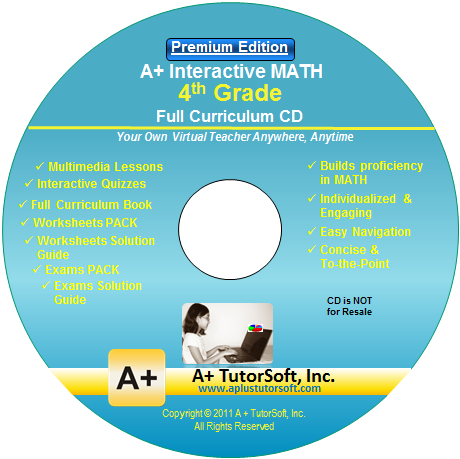
Thanks to A+ Tutorsoft Inc., I have been able to do just that. We have been approaching math in a more traditional way using theA+ Interactive MATH 4th grade CD. The program is interactive as the child listens to the lesson and watches the instructions and math problems on the screen. Each lesson also has a question and answer section instead of traditional worksheets. 
Since this is a new way of doing math for Cameron, I was thankful to see I could still print the worksheets. This was especially helpful on units he needed additional practice on. I set the expectation of 85% correct at the end of each lesson, if he got fewer than that correct I printed the lesson for us to work on together.
A+Tutorsoft MathWe only had to print out 2 of the lessons before he realized that if he paid a little more attention he would probably get enough right that he didn't have to sit with Mommy and redo the assignment.. We scheduled Math as part of his work at least 3 out of the 4 school days a week and will continue this way for another month or two before we decide if we are going to adjust his schedule. 
Who knew 1 CD could change the way this crazy boy would think about Math. Instead of "blowing through" a worksheet, he actually had to sit and listen to the instruction and work through the problems. 

 A+ Tutorsoft Inc. has both the CD curriculum and as well as an interactive online program for 1st grade through Algebra 1 to cover your complete Math needs. A+ Tutorsoft Inc. has generously given our readers a bonus coupon that can be used through March 31,2013 giving them 50% of their order. Use promo code SPOFFER50 when you check out.(the code is case sensitive). The online program is available as a monthly , quarterly , or annual subscription starting at $19.95 a month. The CD program is available beginning at $99.95. That coupon makes this an awesome deal, a full year math curriculum for under $50. If you aren't sure if this program is for you , they have a download trial  on their website. I can't wait to see how much more progress Cameron makes this year with his math. 

Click to read more reviews from the Schoolhouse Review Crew
Photobucket


 photo DisclaimerGraphic1_zpsf612f371.gif

Monday, January 14, 2013

Math Monday with Vintage 3M bookshelf games


I decided to take it easy for Math today, I pulled out a vintage Bookshelf game from 3M I remember playing when I was little, Quinto. I scored this copy of the game at Goodwill awhile back when green was the color of the week so I paid $1.50. The object of the game is to lay down number tile that equal 5 or whose sum is divisible by 5. Playing a fun game of Quinto worked on mental math skills for both boys although Nathan got tired of the game quicker than I had hoped.
Math games
We didn't keep score this time as this was the first time either of the boys had seen the game, we just played until all the tiles were played.
Math Games


Since the tiles are smaller than say scrabble tiles, I held mine in my hand and the boys layed their's on the table hidden from the other one.

Unionvale Homeschool
Cameron enjoyed himself and is already asking when we get to play again.
Math Mission accomplished for this week! Fun game while working on math facts and improving mental math skills.


Monday, November 5, 2012

Activity Bags , fun and educational options for Science and Math #hsreviews


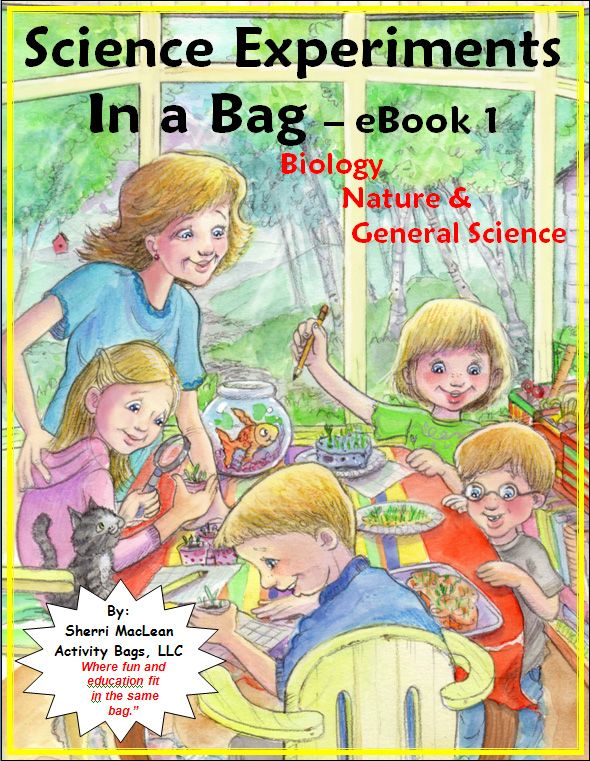
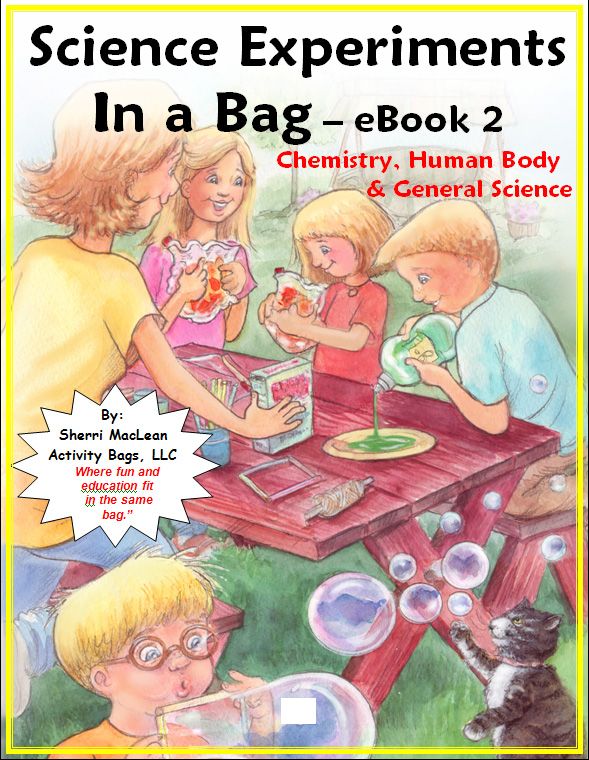
We were so excited to learn we were going to be reviewing a sampling of the Activity Bags series of e-books. If you aren't familiar with the Activity Bags series it is an amazing collection of e-books filled with predesigned activities for Science, Math, Reading, Preschool, and Travel. The pages of the e-books are printed and arranged into Gallon sized zipper style plastic bags for storage and plastic page protectors and binders for travel.
If you aren't sure what you want to teach or how you are going to prepare your hands on science activiites or Math acitivites that your children can grab and go, this is probably one of the very best solutions around.
With some prep work that the kids can help with, Activitiy Bags will become a treasure in your homeschool.
We reviewed Science 1 , and Science 3 as well as Math.

Science 1 contains 25 activities covering Biology, General Science, and even Nature studies.
The boys were excited to be able to "do" science and once they realized that all the work building the bags meant hands on science activities where Mom didn't have to do a ton of work ahead of time, they were even more excited. 
We started off with a trip to Walmart to pick up some colored printer paper and card-stock along with some gallon ziplock style bags. Most of the remaining items we found around the house.  I also stocked up on a few snack size and sandwich size bags to store some of the miscellaneious supplies in.
To make my life a little easier, I started out by printing the cover of each of the 4 e-books we would be using and the table of contents for each one as well.
Our next step was to select the activities we would be building for this round. (I wanted to build a good sampling for the boys with the goal of eventually have all 75 science bags built)
We started out with Catch a Web, Bird Seed, Balloon Skewer, and Feasting Yeast. A nice collection of easy to understand and fun to do experiments. These also led to exploring other nature and Biology elements around our house during the harvest season. (We talked about bugs a lot, we watched the birds eat having a better understand of the 'bird seed' and we explored yeast and cultures that are all around us since Mommy is experimenting with Lacto Fermentation in foods)
Next we worked on Science 2  and explored Chemistry, the Human Body and some more General Science studies. I again printed the Cover and Table of Contents and went through the list with the boys and selected a few activities to build. We decided to go with Calling Long Distance, Color Confusion, Cork it, and Taste Test. I have already selected 5 more to create for them for the holiday break when we do more fun stuff and not so much traditional school.
The boys love that they can do the experiments over and over again and actually play science with activities like Calling Long Distance where they built a "phone" to learn about sound waves but also pretend to call people even each other.


Our final , Science 3 explores Chemistry alone and is Nathan's favorite from the 3. (I think he is going to become a Chemist or something in that line of work.).
Same drill, printed the Cover and Table of Contents,  this time I looked over upcoming lessons a bit more and found a couple of overlaps so made sure to include those activities, the first was easy Green Copper as Cameron was going to be doing that same experiment with his co-op class when they studied the Statue of Liberty and the copper turning green. Lots of Lava, Seltzer Rocket, and Soda Blaster where next on the list as Nathan kept asking if we could blow things up so I found things that would "blow up". I ended this first set with Wheres the Water as I was working on another blog article and happen to have a few diapers (not something we keep around much anymore). So far, we have made messes, learned lots, and found out how much the boys love science. Mommy thinks we will end up with a complete set of 75 science activities before the end of the year.
I did decide I am going to sort the activities and store them in either drawers or milk crates. One photo on the website shows a laundry basket and I think that would work but would take up a lot of space. I am temporarily storing the science bags in 12 x 12 scrapbook file boxes in our cubbies  since I have less than 20 so far.

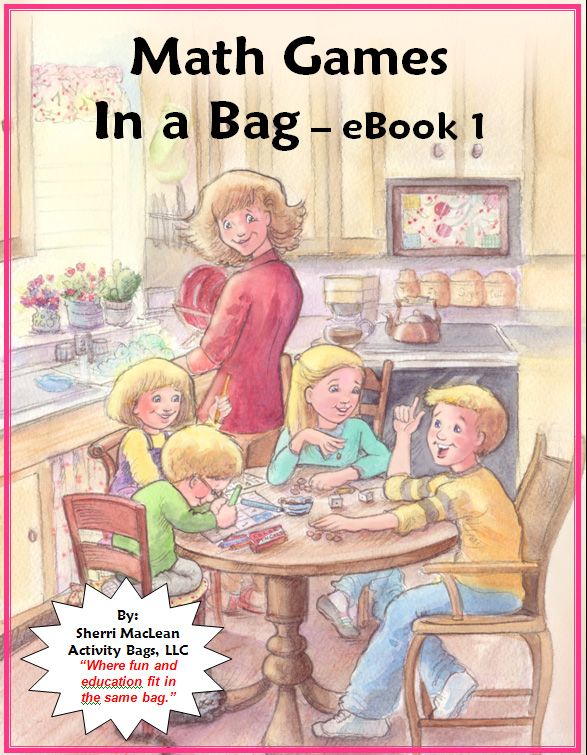
Stepping away from Science a bit, we also received the Math. activities Bags e-book.  The Math Games in a Bag has 33 activities covering a nice range of math skills. I printed the activities list and the Cover and began selecting the activities. This one posed a different challenge, with 2 boys at slightly different math levels I had to decide which activities to focus on and which skills needed the most work. To make it more economical I decided to pick a couple that I had pieces either already made or things I can use instead of printing. The first bag to get built , Math Blocks. This one I didn't have to print the colored pieces as I just pulled out our real math blocks and incorporated some into the bags. I also went through and picked out ones that could be bagged together with like pieces (the dice activities made sense so I could put all the masters in page protectors and just 1 set of dice). Double Digits, How Many Dots, Multiplication Toss, and Stacks of Money ended up in one bag with just a single pair of dice. The boys' favorites for the Math Games have to be Dot to Dots and Family Menu. I think I actually need to reprint Dot to Dots and have it laminated for wear as they love this one the most.  Who knew a little challenge between brothers could be so much fun. Actually Mommy gets in on this one as often as she can. I did find have 2 different colored dry erase makers or crayons comes in handy with this one.
One activity got a slight modification just because that is the way I roll, I loved the idea of Turn of the Card, but didn't want the boring card-stock numbers, so I included a deck of cards with just the A-9s.That gave them 4 sets (actually I used 2 sets of cards so we could all play).

I have the Travel and Reading e-books as well but will be showing those as part of our upcoming road trip travel binders, Homeschooling on the Road with Daddy.

Each of the Activity Bags e-books can be purchased for $15.00 or in bundles for the Science and Preschool  for $27.00. If you aren't sure about if your children will like them, you can take a survey and receive a sample file with a nice variety of samples for free.
You can also rest in knowing that this product was created by a couple of Homeschool Moms who created this to fill that need of what to do with the little ones while you school your older ones.
I have fallen in love with the Activity Bags e-books and can't wait to see the upcoming Craft Bags, but you really don't have to take my word for it, the Schoolhouse Review Crew shares their thoughts on the program as well.
Photobucket


disclaimer: I received the above mentioned ebooks as I member of the Schoolhouse Review crew in exchange for our honest review of the product. No monetary compensation was received.